
How Sanford homes end up with mold
Humidity is the constant here. Summers in Lee County sit in the 90-percent range for weeks at a time, and a lot of the housing stock, especially the mill-village homes around Jonesboro Heights and older farmhouses out toward Broadway and Lemon Springs, was built before vapor barriers and sealed crawlspaces were standard. Add an AC system that's oversized or short-cycling, a roof leak that went unnoticed for a season, or a dryer vent dumping moisture into the attic, and you have everything mold needs.
What our remediation process actually involves
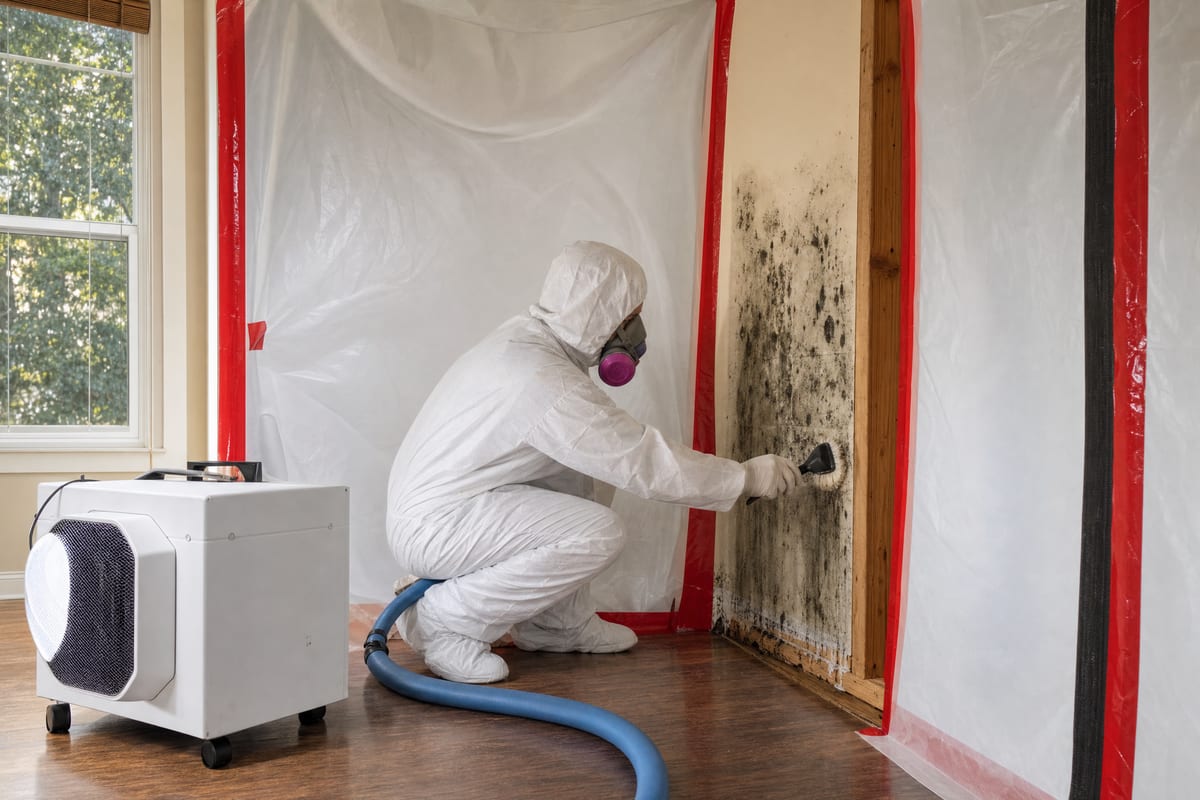
We contain the work area with plastic sheeting and negative air pressure so spores don't spread to the rest of the house while we work. Contaminated drywall, insulation and other porous material gets bagged and removed, not just sprayed over. Framing and subfloor are treated with an EPA-registered antimicrobial, then HEPA-vacuumed and wiped down. We don't call it finished until moisture readings in the affected area are back to a normal range.
Remediation versus removal: what's the difference
Some companies advertise 'mold removal,' which isn't really possible since mold spores exist everywhere in normal air. Remediation is the accurate term: bringing the mold colony down to a normal, healthy level and fixing the moisture source that let it grow in the first place. If we clean a bathroom ceiling but don't address the fan venting into the attic, the mold is back within months. We fix both.