
Why Lee County crawl spaces are especially exposed
A lot of homes here, particularly older ones around Tramway and Lemon Springs built before sealed crawl spaces became standard, sit over bare dirt with vented block foundations. That design pulls in humid outside air all summer, and the clay soil common through central North Carolina holds groundwater close to the surface after heavy rain. Both push relative humidity under the house well past the point mold needs to establish.
What removal and treatment involves
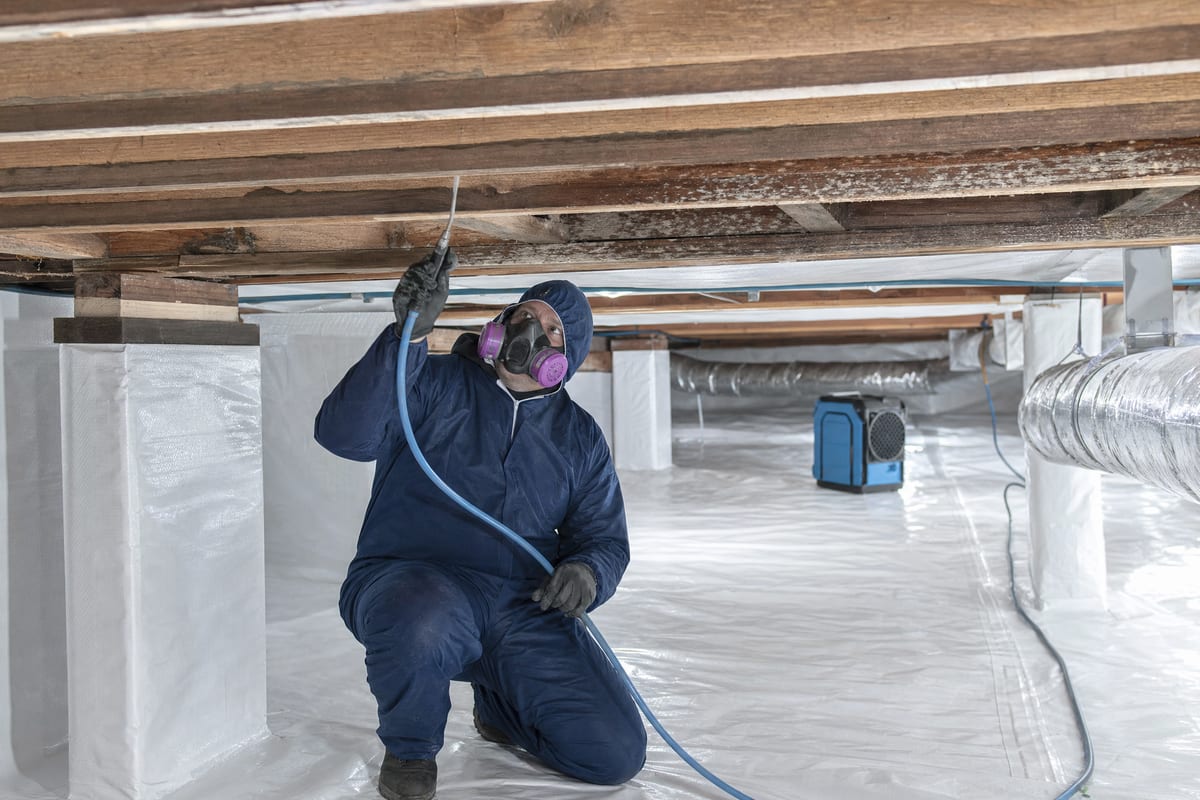
We remove and bag insulation, wood debris and any material that's structurally compromised, then treat exposed joists, subfloor and sill plates with an EPA-registered antimicrobial. Where the growth has affected structural wood, we'll flag it honestly rather than just treating over a weakened joist. HEPA vacuuming and a final moisture check finish the job.
Encapsulation as the long-term fix
Treating the mold without addressing ground moisture is a temporary fix. A vapor barrier across the crawl space floor, sealed foundation vents and, where needed, a dehumidifier keep humidity down so mold doesn't return in a year. We'll quote encapsulation separately so you can decide what fits your budget now versus later.